CONTRABAND CELL PHONE DETECTOR STOPS PHONE CHATTING IN THE CLASS
As more students own windows phones, smart phones and other mobile devices, academic integrity is a subject that many school leaders are wrestling with.
The Phoenix-based wireless security firm CellBusters Inc. has a possible solution: It’s a pocket-sized cell phone detector that can tell when students are using a cellular signal when they shouldn’t be.

The mobile phone sensor, which costs in the budget, is about the same size as a pack of cards. When the product choices up a mobile signal, it will vibrate—and the red LEDs on the device will light up.
The inside range of the cell phone sensor differs, based on the number of surfaces and the development of the building. But in an open area, the recognition range can increase as far as 75 feet and it is adjustable, says Cellbusters CEO.
If a cell phone is in “Airplane” mode, it will not transfer mobile signal, but it still could be used to access information saved on the device. In that case, the cell phone detector would not identify this action. Still, it offers a way to make sure that students are not text messaging each other during examinations.
REF: CELLBUSTERS | CELL PHONE DETECTION
Security of Trade Secrets
Any business that has valuable intellectual property must take suitable measures to safeguard it against theft. Often, obtaining a patent is the most effective way to go. But there are often circumstances in which a company may decide that it is advantageous to keep the information “in-house” and to treat it as a trade secret. In such circumstances, it is essential to employ rigorous security measures including both physical security, such as safes, and electronic security, such as surveillance cameras and mobile phone detectors.
A patent – once successfully obtained – gives the patent holder some exclusive rights for a given period of time. During this time, others are prohibited from using or selling the patented invention. In order to be granted a patent, the inventor has to describe the invention and this information becomes public knowledge. As an alternative, the inventor might elect not to make the information public and, instead, to maintain it as a trade secret.
There are many reasons why an inventor may prefer to keep an idea a secret, rather than pursuing a patent. These include:
- Patents can involve significant expense, especially if the inventor wants to patent the invention globally. Patents are granted by individual countries, so getting global patent protection is a complex and expensive undertaking.
- Obtaining patent protection is time-consuming and can delay product development and launch.
- The information in a patent application is public, and competitors may view it and be inspired to develop their own related ideas, to the extent that they are not covered by the patent.
- In more egregious cases, an unscrupulous rival may simply steal the idea without regard to the patent protection.
- If a patent is infringed, the patent holder may find that the only redress is through litigation, a slow and expensive process with no guarantee of success.
- Finally, a patent is granted for a limited time (typically 20 years). If you have an idea that you hope will be viable for longer than that (the secret recipe for Coca Cola is a fine example), you might prefer to keep the secret to yourself.
For every invention, your company should make a determination whether there is an advantage to taking out a patent, or keeping it secret. In some cases, there is little option: for example, if a product you wish to sell can readily be reverse-engineered, it will be impossible to keep its workings secret. A patent is the only way to go. But in other cases, such as a novel manufacturing process, it may be possible to keep its details secret.
Security then becomes a vital component of guarding the secret. Any employee who needs to know about it must understand that they are obliged to maintain confidentiality and must commit to this, including signing an appropriate confidentiality agreement. Access to the confidential information should be as limited as possible, for employees, contractors, and any other visitors. Recording devices might be prohibited in certain areas, such as manufacturing floors, storage locations for components or ingredients, and document repositories, whether these are physical or electronic. Security should be monitored by security personnel aided by electronic safeguards including cell phone detector and closed circuit television.
Certainly, there is a cost to implementing the appropriate level of security, but compared to the cost to the business if a vital secret is lost, it is well worthwhile.
CELL PHONE DETECTOR AND OTHER DEVICES FOR SECURITY
Your business premises house most, if not all, of the assets that are vital to the functioning of your business. These include not only physical assets such as equipment, computer systems, and furniture, but also intellectual property, such as descriptions of proprietary manufacturing processes, innovative engineering plans, computer code, experimental results, and customer data. It’s imperative, for the sake of your business, to take appropriate security precautions to safeguard all of these assets.
If you are a business manager, or otherwise responsible for safeguarding your company’s assets, here are five important technologies you should consider as part of your security solution.
Entrance alarms
For any business location, however large or small, security starts at the perimeter. Any possible point of entry should be equipped with an alarm system. In many cases, this works in conjunction with electronic ID cards that are issued to employees, who can use them to operate electronic locks. Electronic locks can also be used to restrict access to sensitive areas within the building, such as computer server rooms or research labs, where only authorized personnel are allowed.
Closed-circuit television
Closed-circuit television (CCTV) cameras are one of the most efficient and effective ways of monitoring the safety and security of business premises. Many public premises such as retail locations make a point of placing CCTV monitors prominently where would-be shoplifters will see them and, hopefully, be deterred from committing a crime. In offices and manufacturing facilities, cameras can help ensure employees are not indulging in inappropriate behavior of any kind. They can also help with employee safety in locations such as parking lots (monitoring for automobile break-ins, for example).
Motion detectors
Motion detectors can be deployed to detect the presence of unauthorized visitors in a wide variety of locations. Their advantage over security cameras is that they do not rely on the vigilance of an operator staring at a screen to spot an intrusion. Instead, any movement that triggers the detectors will set off an alarm that alerts security personnel. Motion detectors can be used to complement a building perimeter security system. Even if an intruder somehow manages to get into the building, he will set off an alarm as soon as he enters any area protected by a motion detector.
RF detectors
Radio frequency (RF) detection devices identify emissions from various kinds of electronic equipment. These can be used to signal the presence of a variety of threats to security, including hidden microphones, cameras, and even GPS trackers. In some cases, it may be appropriate to use a cell phone detector, which is a type of RF detector that is specifically designed to detect cell phone transmissions in areas where these are prohibited.
Fire alarms and smoke detectors
Last, but by no means least, are precautions against fire. A fire is perhaps the most devastating disaster that can hit a business. It can completely destroy business premises, and all of the records, inventory, computer systems, and everything else that a business relies on to function. It is imperative that you install fire alarms and smoke detectors that, at minimum, meet the regulations that govern your commercial premises, and ensure that these are regularly maintained and tested.
Cell Phone Detector for prisons
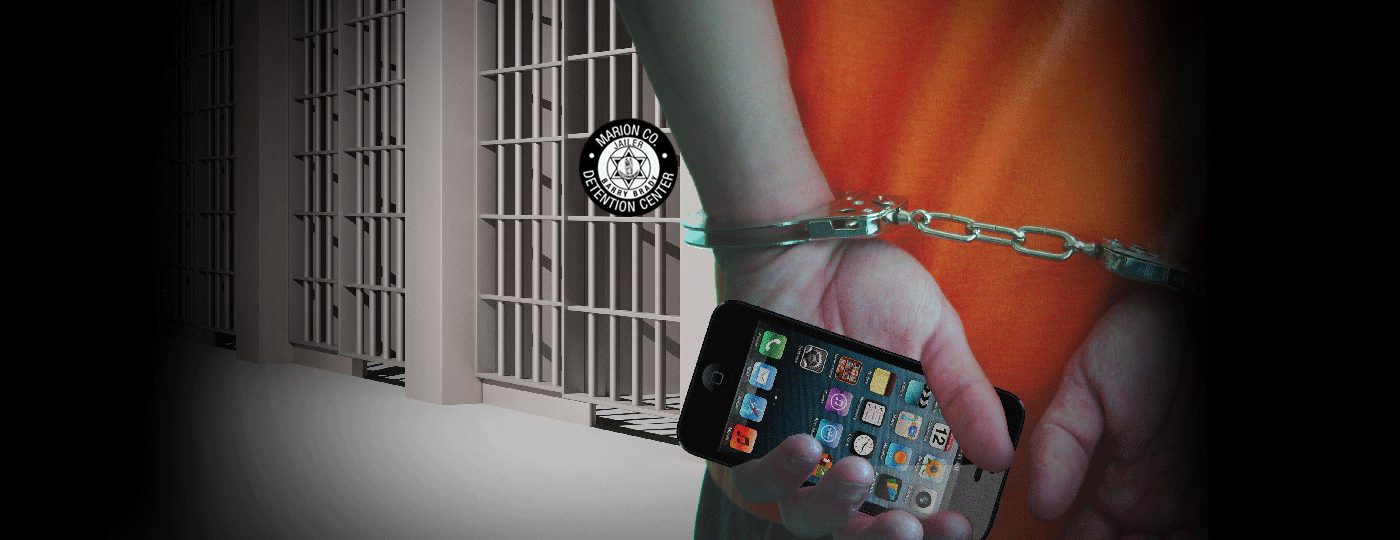
Are you the investigating officers or warden or jailor of the prison of a small town or a movies theater to stop use of cell phone? Cell phone Detector can be used for jamming the cell phones which is the most important part, Cell Buster introduces a new device for jamming cell phone signal in the prisons to stop criminals to attempt crime over smart phone or to talk with others. Previously known as cell phone detectoion or zone protector detects all cell phone activities like Texting, massaging, data or calls. It includes many alert options like audio and video with adjustable detection radius circle depends over size of the room. It has rechargeable battery. With this you can protect your data and privacy from others and stop no. of crimes occurrence.
CellBuster’s Cell Phone Detector-The Perfect Spy
There are many situations where a smart phone is the ideal tool for espionage: any meeting or conversation that addresses sensitive information that should be closely held; any location that reveals proprietary processes or products; or anywhere that offers an enticing opportunity to hack into the organizations data systems, to name but a few examples.
In such situations, and any number of others, a smart phone can provide the would-be spy with a veritable Swiss army knife of options. These include:
- Voice transmitter: Most obviously, the phone can transmit any conversation – not just that of whoever may be holding it, but anyone in the vicinity.
- Audio recorder: It is trivial to record the audio of any meeting or conversation that the phone is brought into, without any attention being paid to the device, since almost everyone in the room will likely have one.
- Text messages: As most high school students can attest, texting is often used as a sneakier way of communicating than talking on the phone. Information can be sent – and received – without the user being overheard, making text communication much harder to detect than a voice call.
- Camera: In the old days, spies had to sneak miniature cameras into secure locations to photograph documents or other items of interest. No longer: almost every smart phone today comes with a camera, often with very high resolution.
- Video recorder: With memory cards now available with 32GB or even 64GB capacities, phones can record several hours of video.
- Real-time video streaming: With the help of an app such as Skype, video can be sent in real time to a remote location.
- Data exfiltration tool: With just a little know-how, is not too hard to hook a smart phone to a computer or network. Sensitive information can then be downloaded to the phone and simply carried off the premises.
- Malware platform: A smart phone can also be used to introduce malware into a system. Once hooked up to a computer network, rather than downloading data directly, the smart phone can be used to install malware that will allow a hacker easy access from the outside to obtain passwords, steal sensitive information, or even to inflict damage on the victim’s information systems.
Smart phones are doubly unobtrusive in most business environments, first because they are small and easily concealed and, second, because so many people have them, so seeing one rarely arouses notice, let alone suspicion.
In any sensitive situation, you should consider prohibiting the introduction of cell phones. However, enforcing such a policy is hard in most business situations: airport-style security checkpoints with metal detectors and trained staff are expensive and intrusive. A good alternative is to clearly state that cell phones are not to be used in a particular location. It is then important to install a cell phone signal detector to monitor compliance. A mobile frequency detector is easy to set up and use, and gives immediate notice of any unauthorized use of a cell phone detector in a sensitive location.